Laboratory tests of ore leachability by dynamic cyanidation to assess the recoverability of precious metals and reagent consumption.

The tests provide primary information on the extraction of precious metals from ore.
The need for reagents, including lime and sodium cyanide for the working solution, is determined.
Sampling of the productive solution is performed at specified intervals: 2, 6, 8, 24 hours or more.
A fineness analysis of the residue helps determine which fractions are better at releasing metals.
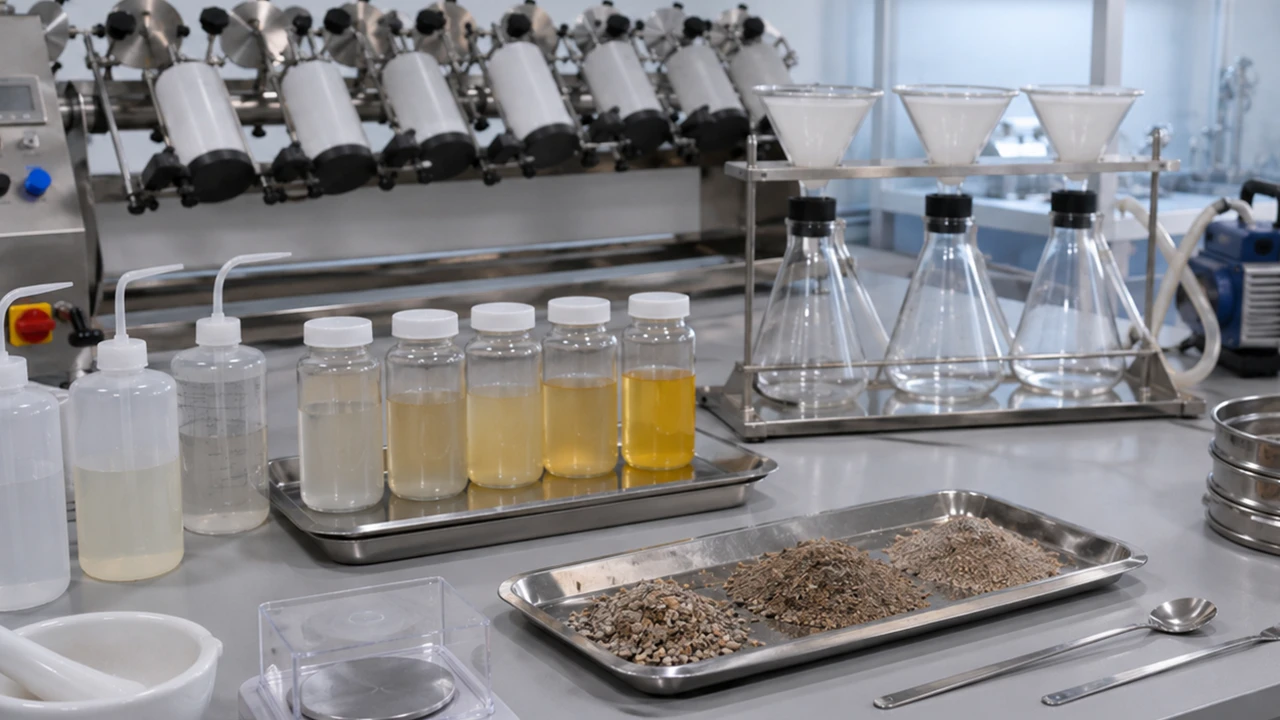
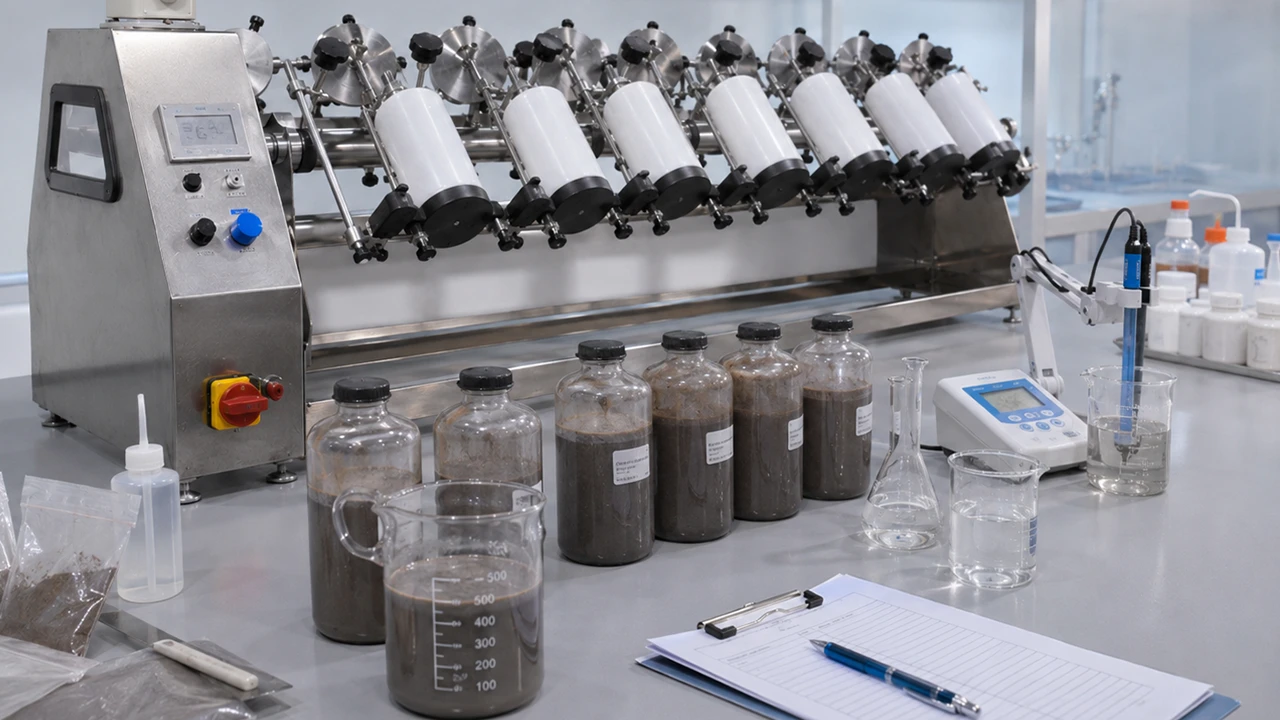
Bottle agitation is a technological test of the ability of ores to be leached by dynamic cyanidation. The method is used to obtain primary information on the recoverability of precious metals, reagent consumption, and ore suitability for further technological solutions.
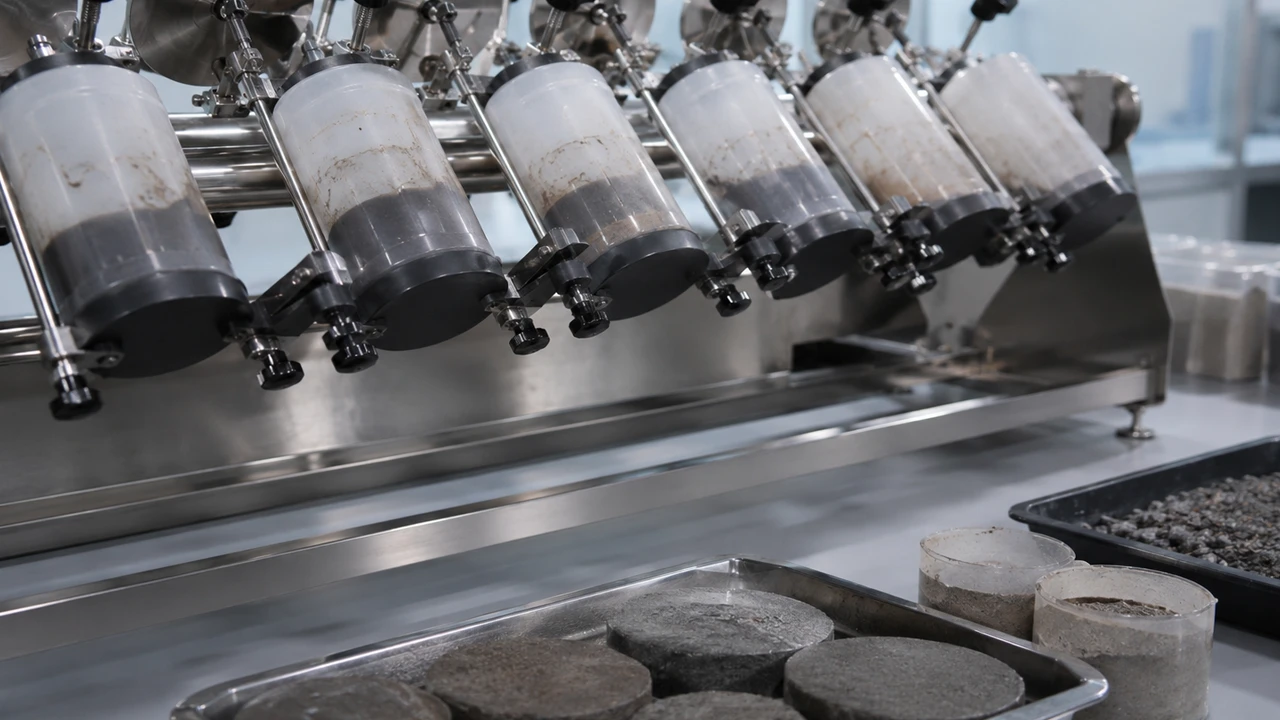
During the tests, lime is added to the pulp to adjust the pH, after which sodium cyanide is added until the required concentration of the working solution is reached. The prepared pulp is mixed in vessels fixed in laboratory agitators. Rotation is interrupted only for sampling the productive solution and monitoring recovery rates.
Sampling can be performed 2, 6, 8, 24 hours after the start of testing, and if necessary - at longer intervals. This approach allows us to evaluate the dynamics of leaching and determine how the recovery of precious metals changes over time.
After leaching is completed, the pulp is filtered to separate the liquid and solid phases. The solid residue is washed and sent for analysis to determine the residual content of precious metals. If necessary, the residue is divided into fractions by size, which makes it possible to evaluate the distribution of metals and the release efficiency for different material classes.


Information on the degree of recovery of precious metals from the ore under study.
Estimation of the reagent consumption required for the leaching process.
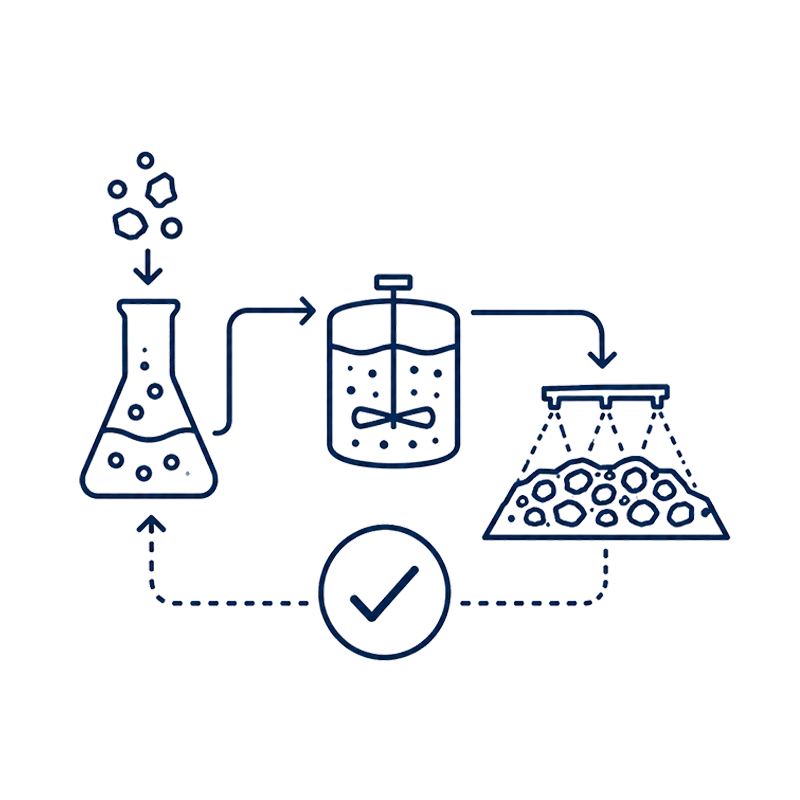
Data for preliminary assessment of ore suitability for heap leaching and further testing.

Scan the QR code or follow the link to check the validity and authenticity of the accreditation certificate through the official UKAS service.
The QR code leads to the certificate verification page. On the service page, you can view up-to-date data on accreditation and document status.
Leave a request — we will specify the task, type of material, scope of work and prepare a commercial offer for your request.
Leave a request and an Alfa-Lab specialist will contact you to clarify the task and suggest the appropriate format of work.