
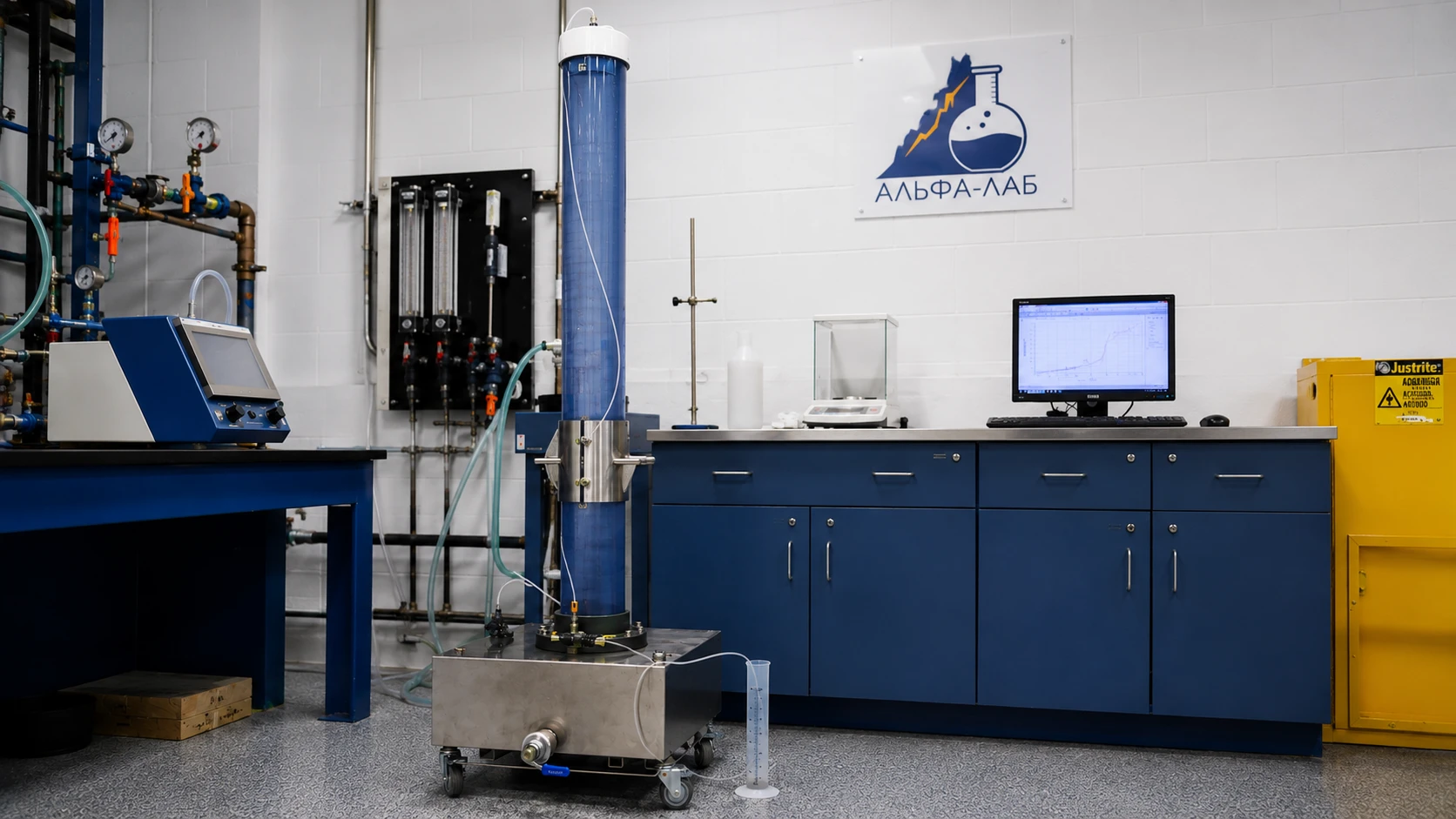
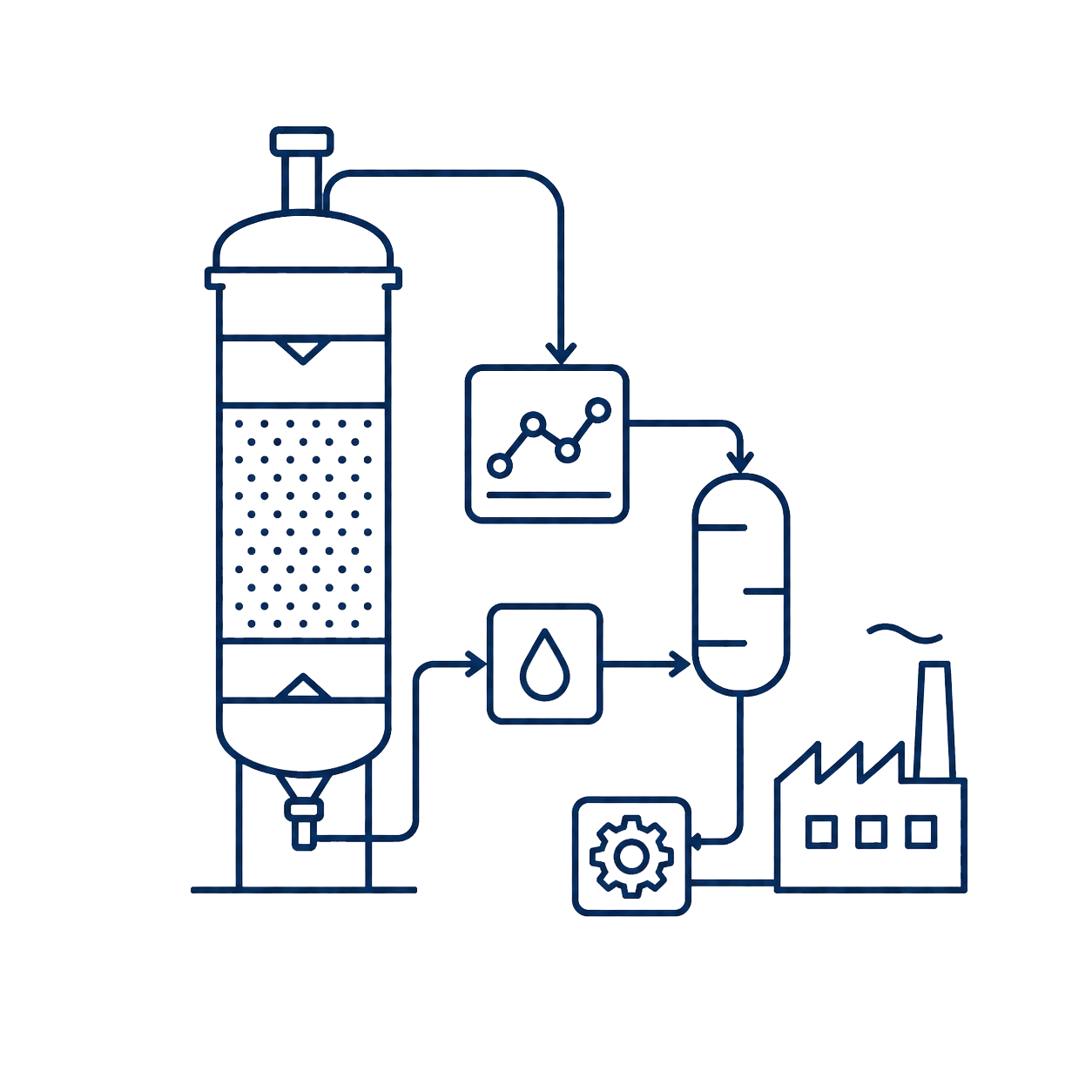
The column test makes it possible to assess the recoverability of metals, reagent consumption, and ore leaching behavior under conditions close to production.

The method creates conditions that are as close as possible to the leaching process in production.
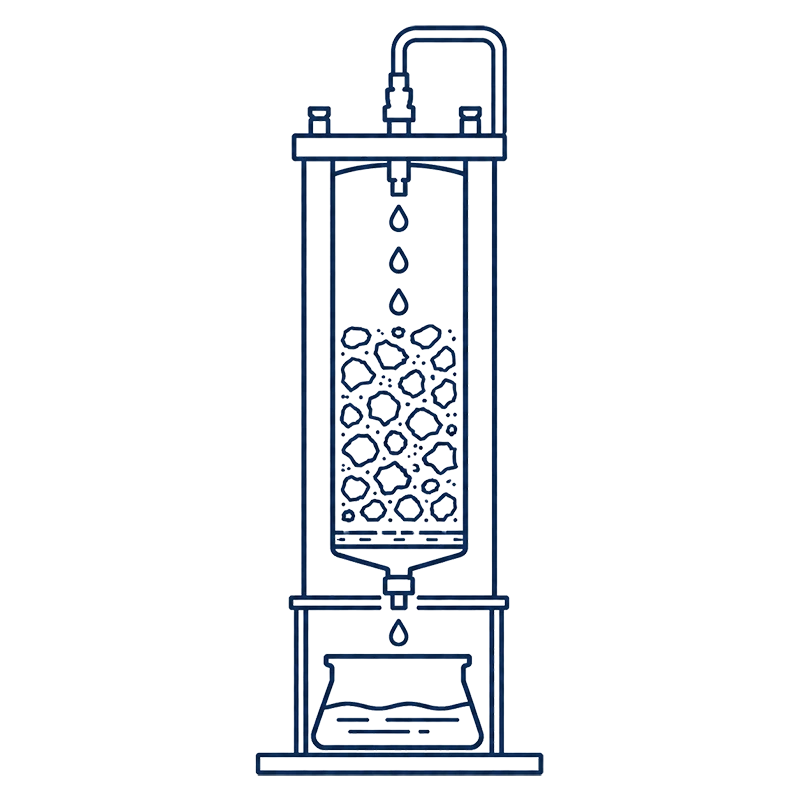
Large ore samples loaded into laboratory columns are used for testing.

The productive solution is selected and analyzed daily for key technological indicators.

The results allow us to clarify the degree of metal recovery and the need for reagents.
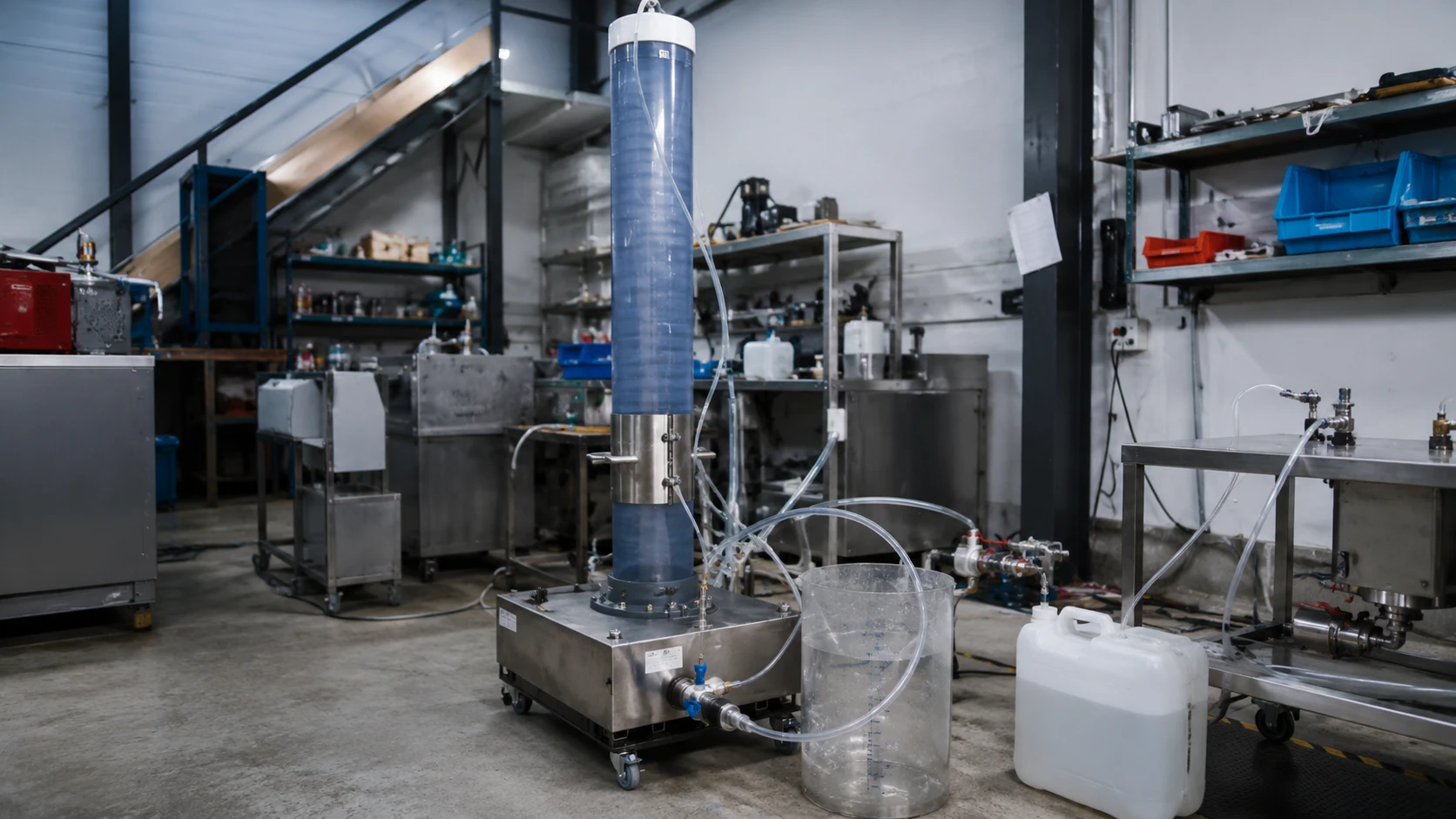
The column test is a technological test of ores for leaching by seepage. The method allows you to create laboratory conditions that are as close as possible to the industrial process, and to obtain data for assessing the recoverability of metals and the need for reagents.
For preliminary tests, samples weighing from 50 kg are used. The ore mixture with a known mass is loaded into the leaching column, after which a low-intensity leaching solution is fed from above. The solution seeps through the ore mass and is collected in a separate container.
Each portion of the production solution is monitored by volume and analyzed for precious metal content, pH level, and cyanide concentration. Such measurements allow you to track the dynamics of the process and evaluate the change in leaching indicators over time.
The procedure continues until the metal content in the production solution stabilizes at low concentrations or further leaching ceases to make practical sense. After the tests are completed, the ore is washed, extracted from the column, dried and sent for analysis of the residual content of precious metals.
If necessary, the material is further dispersed into fractions to determine the distribution of the desired elements. The final recovery rate is calculated based on data on the starting material, accumulated productive solutions, and spent ore.


Information on the possible degree of recovery of precious metals under seepage conditions.
Data on the volume of productive solution, metal content, pH, and cyanide concentration.
Materials for refining the flow chart, reagent consumption, and further testing.

Scan the QR code or follow the link to check the validity and authenticity of the accreditation certificate through the official UKAS service.
The QR code leads to the certificate verification page. On the service page, you can view up-to-date data on accreditation and document status.
Leave a request — we will specify the task, type of material, scope of work and prepare a commercial offer for your request.
Leave a request and an Alfa-Lab specialist will contact you to clarify the task and suggest the appropriate format of work.